ONWRD - A fitness mobile app
[Info] ONWRD Website: https://www.goonwrd.com
You can go in apple app store through this website😊
1. What is ONWRD?
ONWRD is a fitness mobile app I’ve been building as a side project. It helps athletes and everyday gym-goers track their physical condition, monitor training trends, and get actionable insights — all without the bloat that comes with most fitness apps.
The name “ONWRD” comes from “onward” — keep moving forward, one rep at a time.
2. Why I Built It
I tried a bunch of fitness apps and they were either too complicated, too expensive, or trying to be everything at once. I just wanted something clean that lets me log how I’m feeling, see how I’m trending, and stay on top of my condition. So I decided to build my own.
It also gave me a good excuse to learn mobile development and work on something outside of finance and data for a change.
3. Core Features & Plans
Everyone gets a solid baseline — no paywall for the essentials.
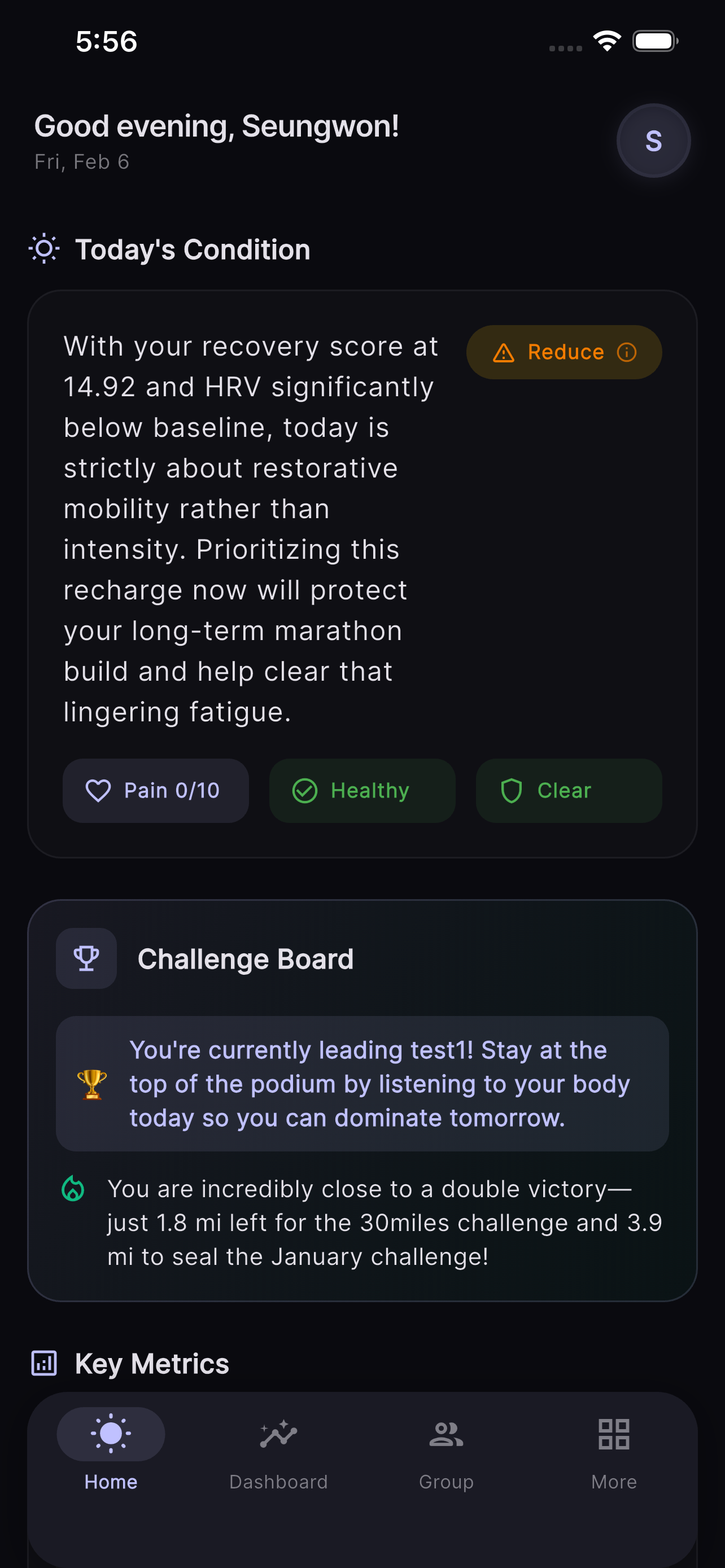
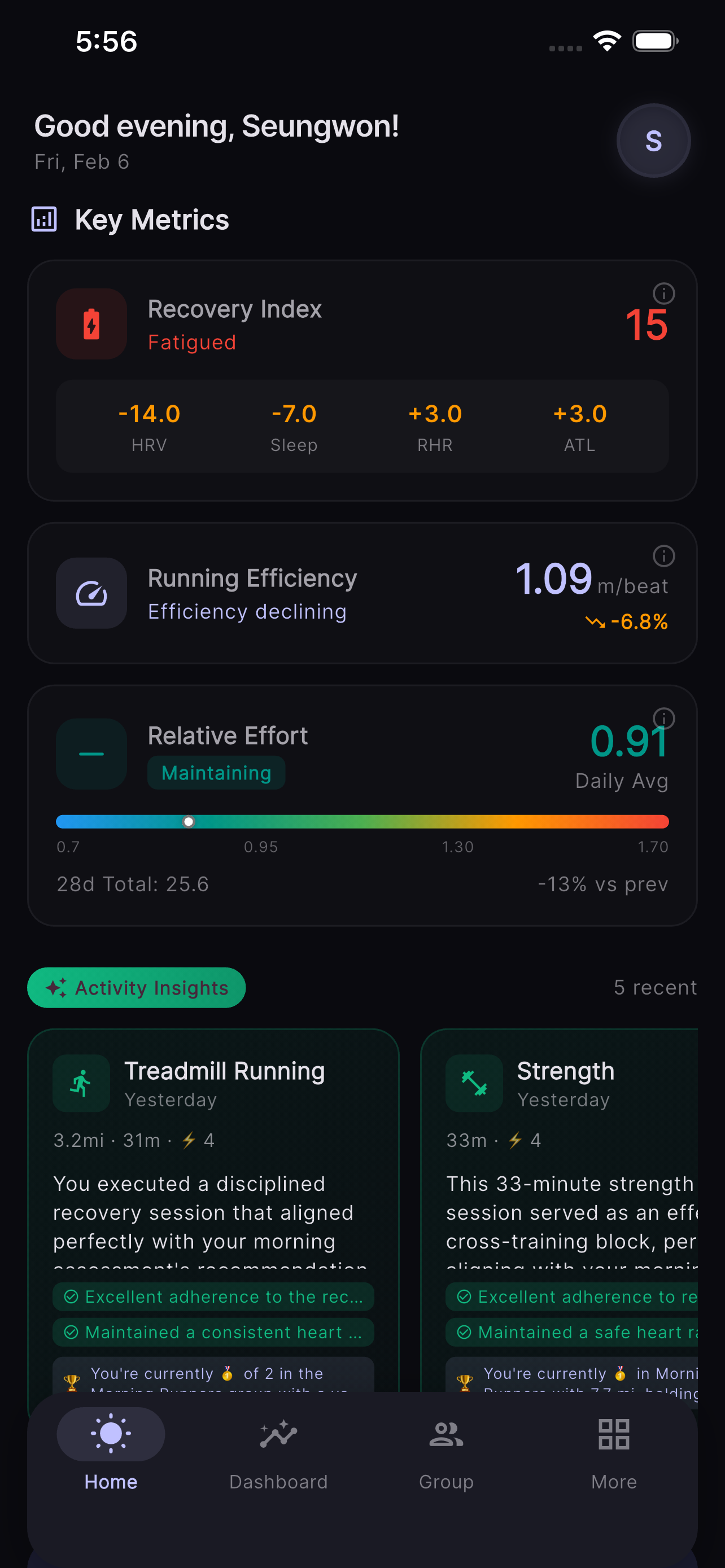
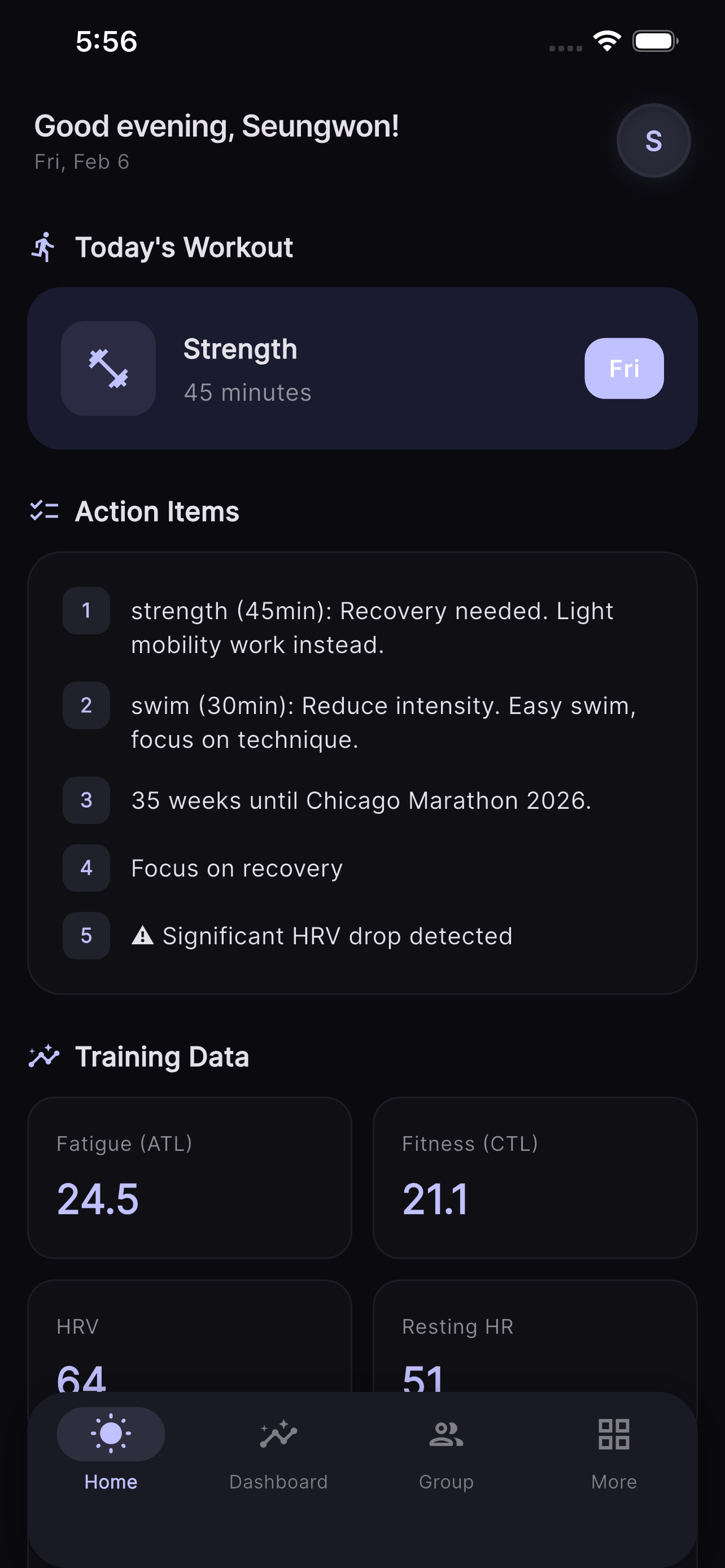
- Daily Condition Insights — Algorithmic analysis of your physical condition each day.
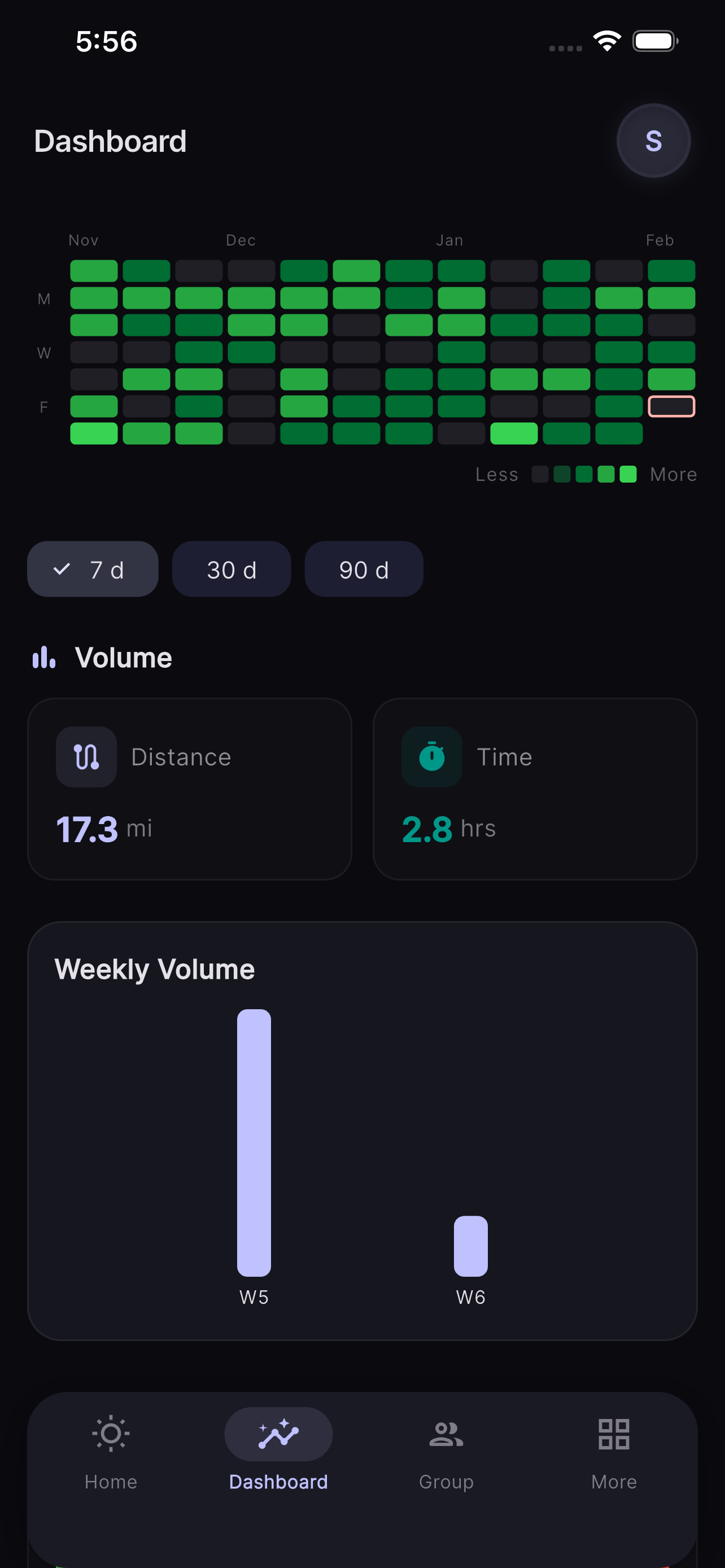
- Dashboard Trends — Track how your condition changes over time with clean visuals.
- AI Condition Interpretation — Refined, personalized breakdowns of what your condition data actually means.
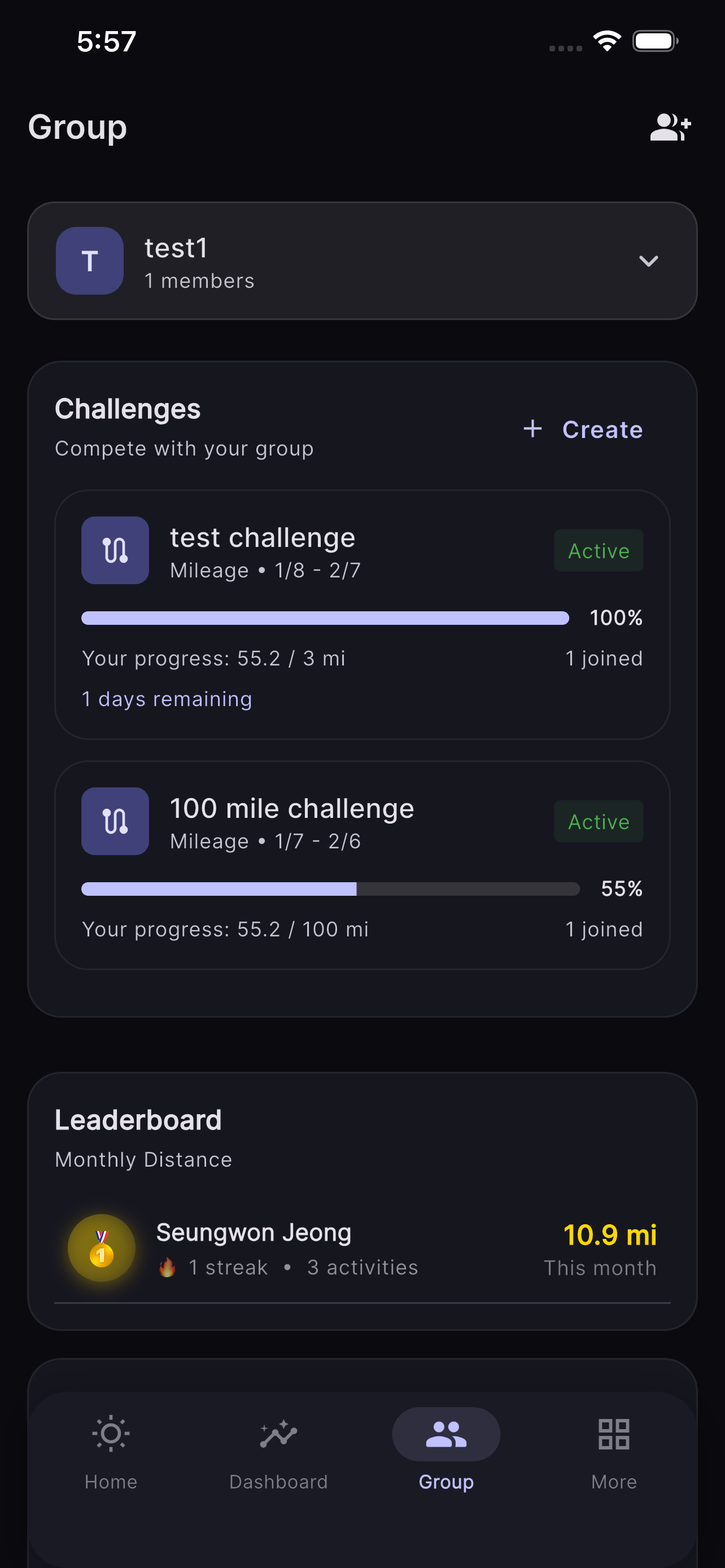
- AI Activity Insights — Smart summaries of your training activity, challenge progress, and leaderboard standings.
- Enhanced Pro Dashboard — More metrics, more detail, better views.
- Challenges & Leaderboards — Compete with friends or your team to stay motivated.
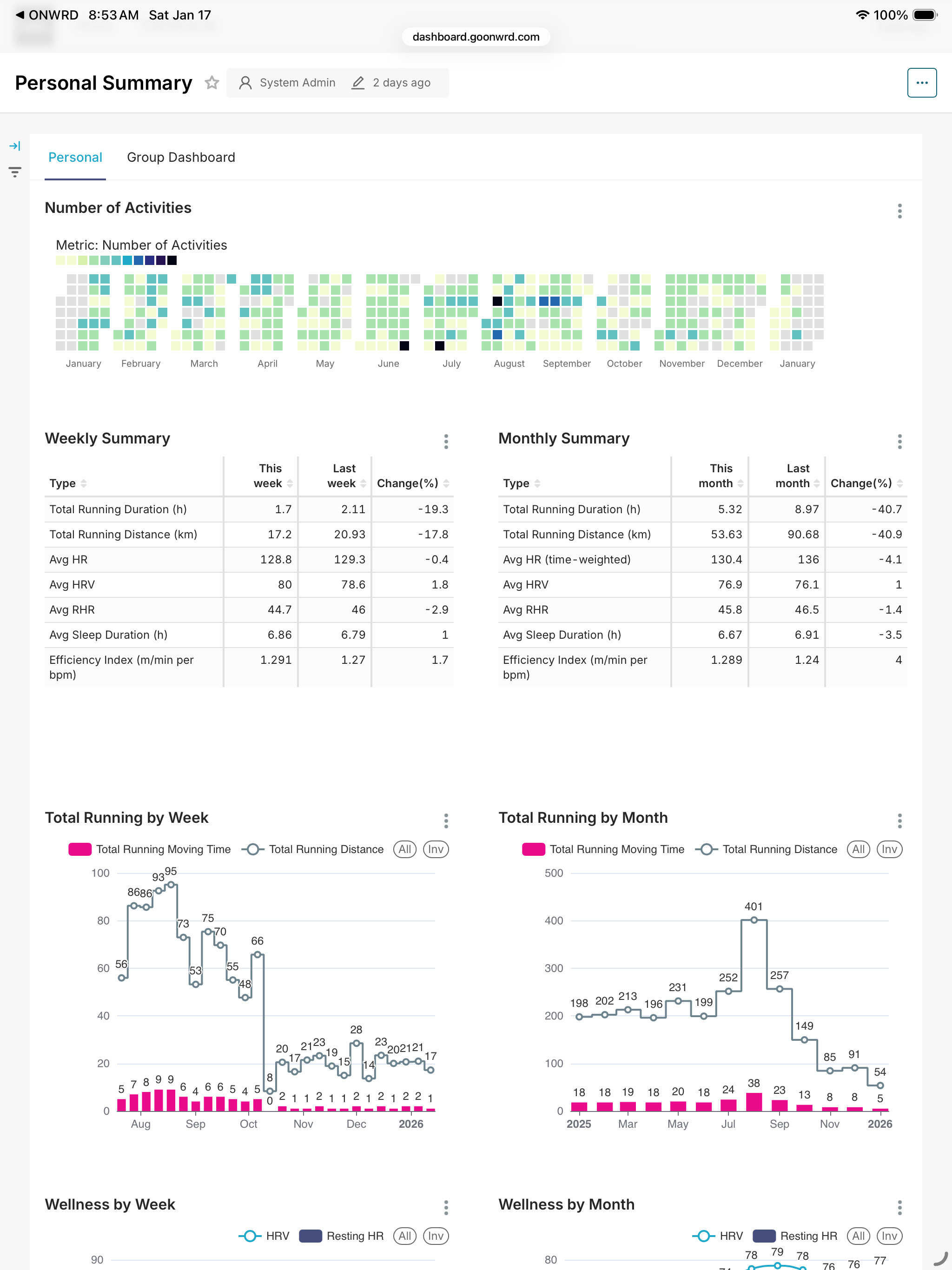
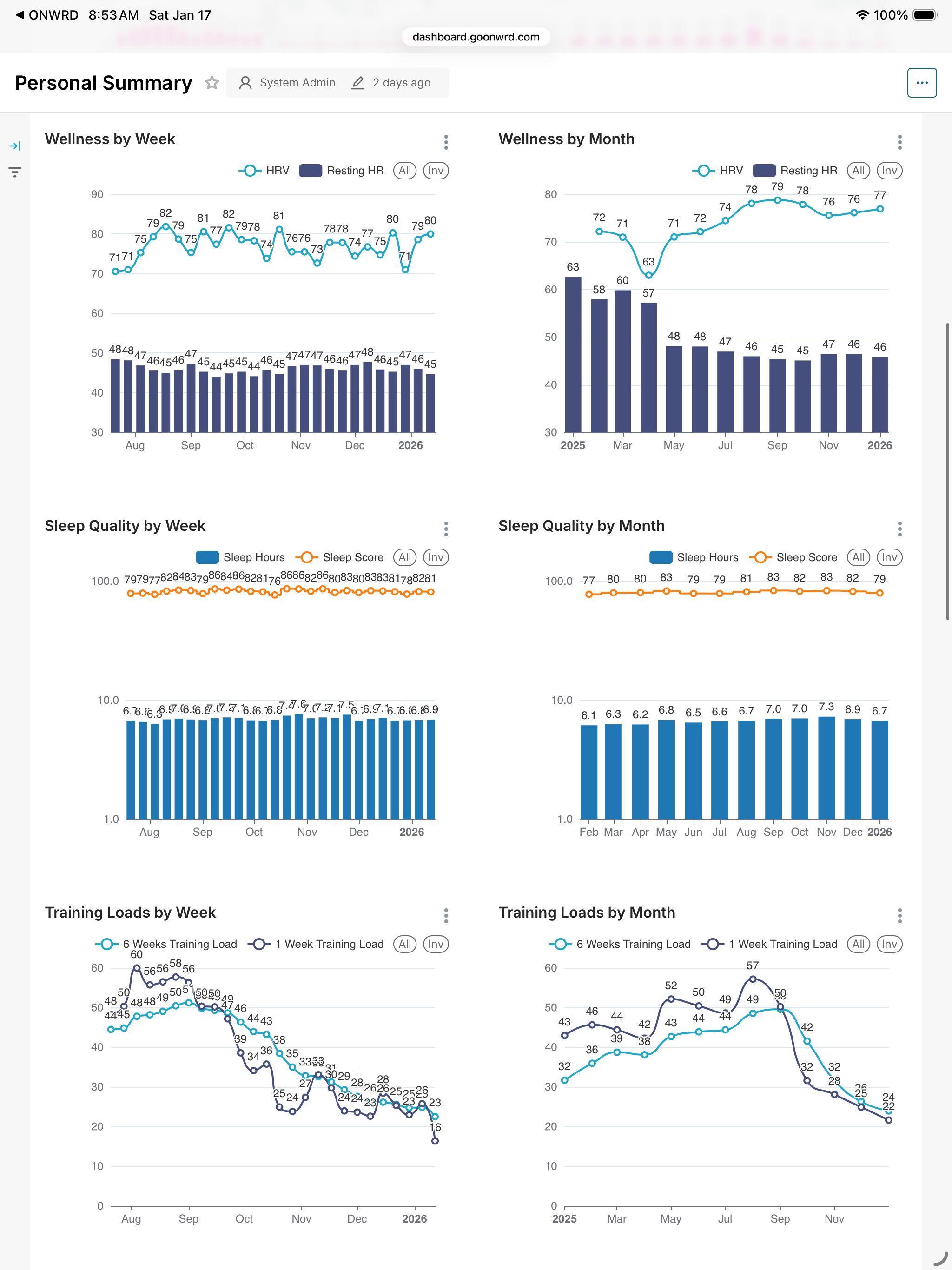
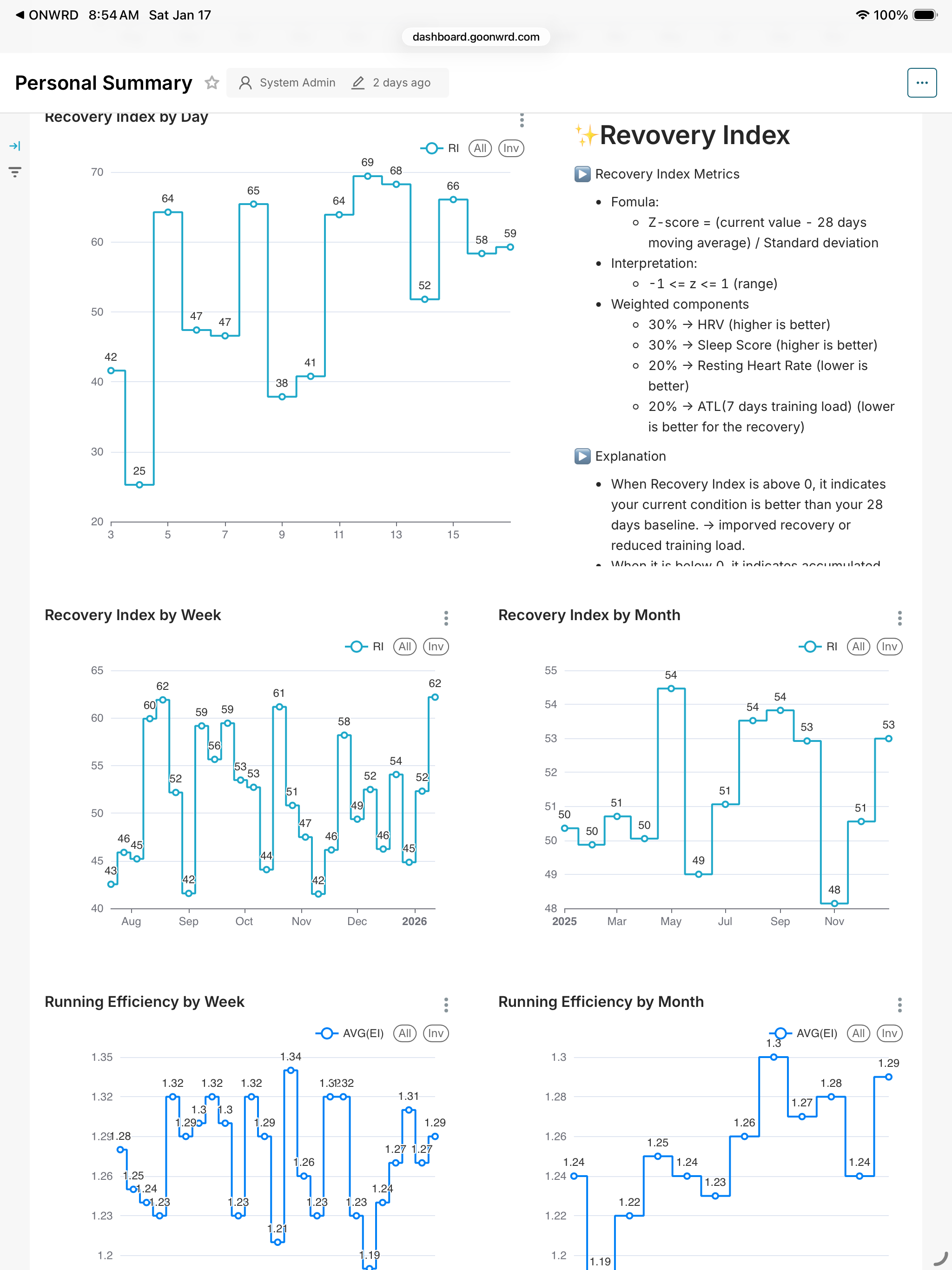
📊 Superset Dashboards
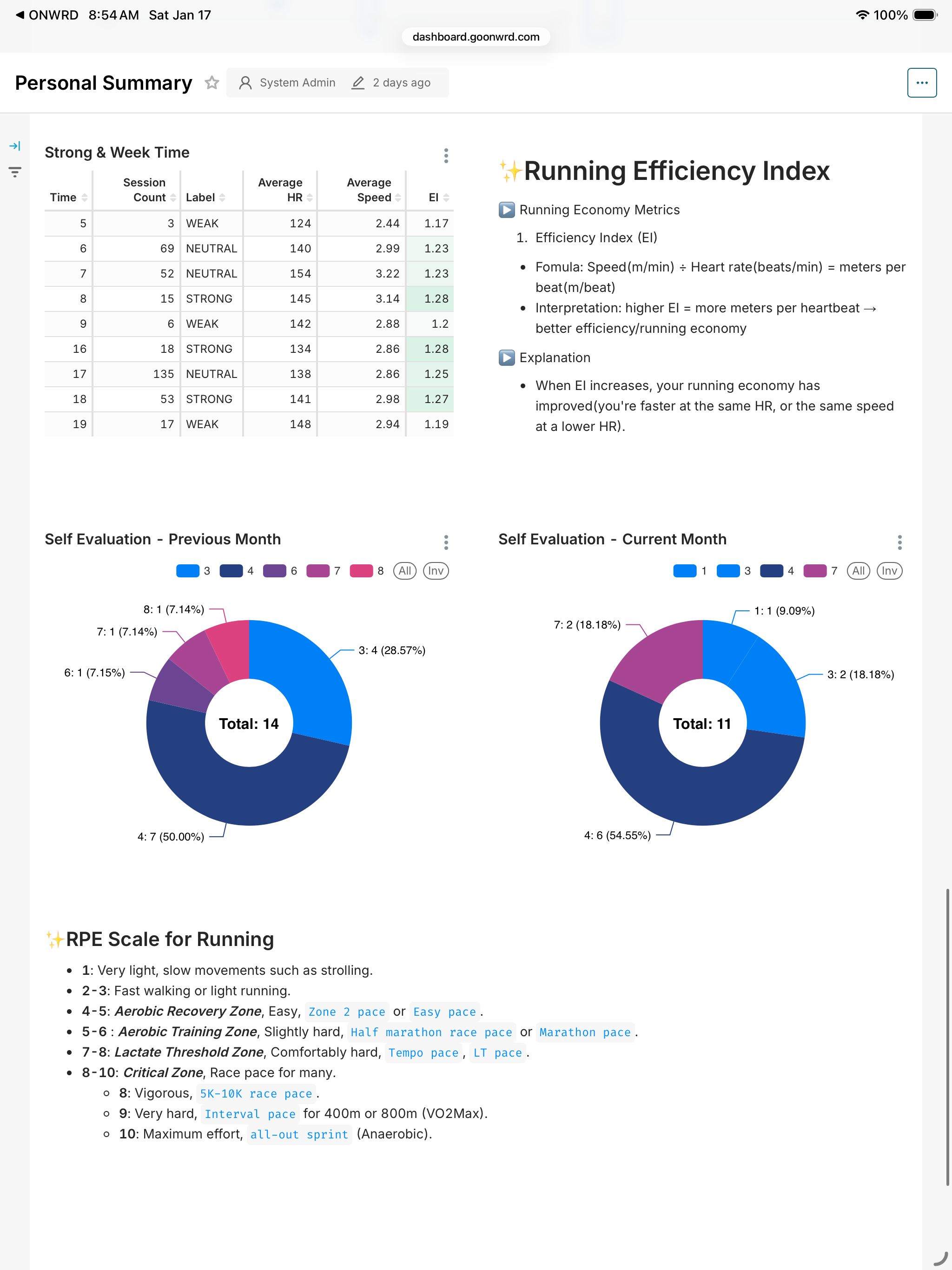
On top of the mobile app, I’m building Apache Superset dashboards for both personal and group use — giving coaches and teams a powerful way to visualize condition and performance data at scale.
4. Tech Stack
Keeping it lean and practical.
| Layer | Tech |
|---|---|
| Frontend | Flutter/Superset |
| Backend | Python |
| Database | PostgreSQL |
| Hosting | Apple |
| Server | AWS/GCP/Supabase/Firebase |
Flutter handles the mobile frontend –> one codebase for both iOS and Android, which saves a ton of time. For the dashboards, I’m using Apache Superset to give users (and coaches) rich, interactive data visualizations for both personal and group views.
The backend is Python –> it powers the REST API, the AI-driven condition and activity insights, and all the data processing behind the scenes. PostgreSQL is the main database, and on the infrastructure side I’m using a mix of AWS, GCP, Supabase, and Firebase depending on the service - auth, storage, push notifications, hosting, etc.
5. What I Learned
Building a full-stack mobile app from scratch taught me a lot. A few things that stood out:
- Flutter is fast to build with, but has its quirks — Hot reload is a game-changer for UI work, but managing state across screens and handling platform-specific behavior (iOS vs Android) took real effort to get right.
- Superset is powerful but needs tuning — Out of the box it does a lot, but customizing dashboards for both personal and group use cases meant digging into configs, permissions, and embedding options.
- Python ties everything together — From the API layer to AI processing to data pipelines, Python made it easy to move fast. The ecosystem around ML and data analysis was a huge advantage for building the condition insights.
- Multi-cloud is flexible but complex — Mixing AWS, GCP, Supabase, and Firebase gave me the best tool for each job, but keeping auth, data, and deployments in sync across providers was the hardest infra challenge.
- Ship early, iterate often — I spent too long polishing the first version. Should’ve gotten real user feedback sooner.
6. What’s Next
A few things on the roadmap:
- Android launch — Currently iOS-only, Android is next.
- Advanced analytics — Deeper breakdowns of long-term performance patterns.
- Coach tools — Dedicated features for coaches managing multiple athletes.
If you’re interested in trying it out or have feedback, feel free to reach out!